Father with stroller in front of Neue Nationalgalerie with St. Matthäus-Kirche visible in the Kulturforum Berlin

Neue Nationalgalerie – Ludwig Mies van der Rohe

...

Neue Nationalgalerie – Ludwig Mies van der Rohe

2021

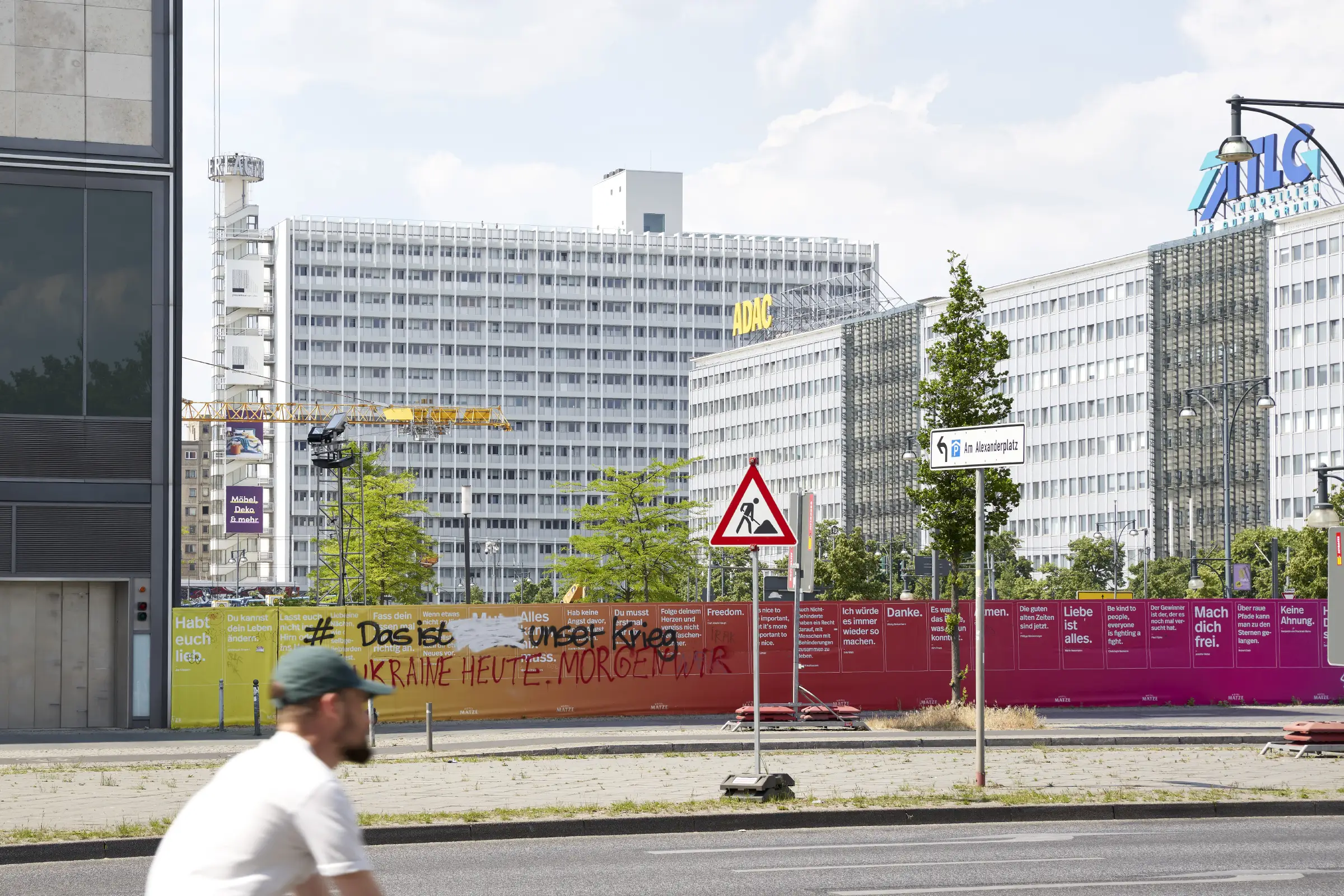
Considered one of the major icons of the classic modernism style in architecture, the Neue Nationalgalerie –  was designed by Ludwig Mies van der Rohe and first opened in 1968.

Situated close to Potsdamer Platz in central Berlin, the building is part of a cultural ensemble including the state library, philharmonic and different museums. 

The enormous square roof of the building rests on eight steel columns and the glass facade is set back from the roof, creating a completely column-free open universal space underneath, flooded by light and opening to the surrounding city. 

Sitting on a raised podium, two narrow staircases lead the visitor underneath. Here, the spaces housing the permanent collection of the museum are of a smaller scale and have a visual connection to the submerged sculpture garden, also granting natural light.

The building was closed in 2015 and carefully restored to its original state by David Chipperfield Architects over a period of seven years. It has a fantastic open quality and somewhat awe-inspiring feeling.

2021

Revolutions of Choice – Barkow Leibinger

...

Revolutions of Choice – Barkow Leibinger

2020

Following an invitation to exhibit their practice/work at Haus am Waldsee in Berlin in 2020, Barkow-Leibinger started an immense process of going through twenty years of model making and literally hundreds of models.

The exhibition Revolutions of Choice gives an overview of the American-German architects continuous practice, following their strong commitment to experimental and sculptural aspects of the design process.

I was commissioned to document the informal process of organising and sorting through the immense model-databank in stills and video.

The result became the resting-entry piece of the exhibition, leading into the complex and diverse work of Barkow-Leibinger.

2020
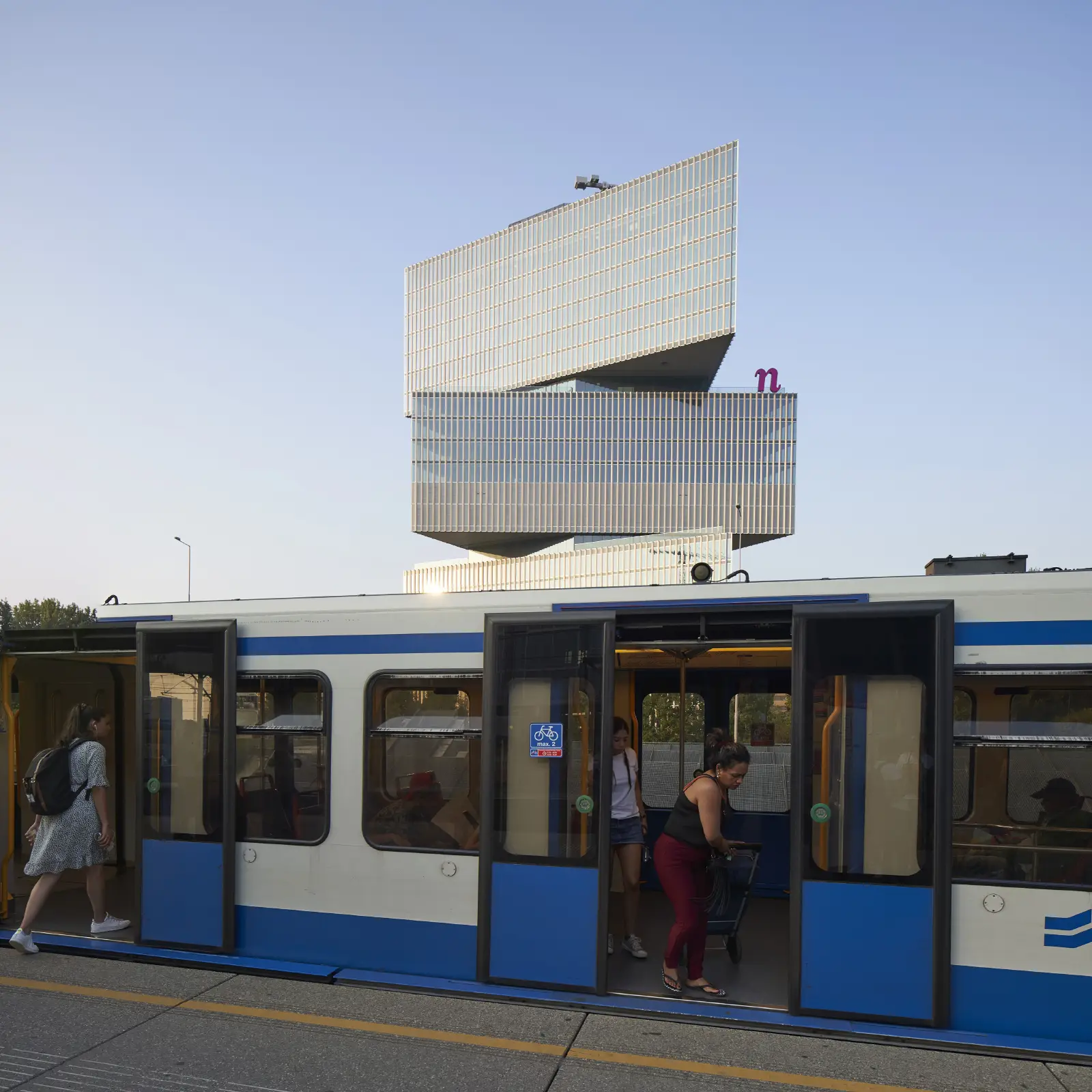
woman entering train at Amsterdam RAI with Rem Koolhaas nHow Hotel by OMA in the background

nHow Amsterdam RAI Hotel – OMA

...

nHow Amsterdam RAI Hotel – OMA

2019

Situated in Amsterdam’s rapidly developing Zuidas business district around the main Exhibition centre, the nHow Amsterdam RAI Hotel is definitely an eye catcher.

Designed by Rotterdam based Office for Metropolitan Architecture / OMA, the nHow Amsterdam RAI is on of the largest hotels of the Benelux states, its 91-metre structure features 650 individual rooms, a restaurant, bar, a broadcasting studio, as well as spaces for work and leisure.

Inspired by the shape of a well-known advertising column in front of the convention centre Amsterdam RAI, the shape of the building consist of three enormous triangular volumes, shifted around a central axis.

2019
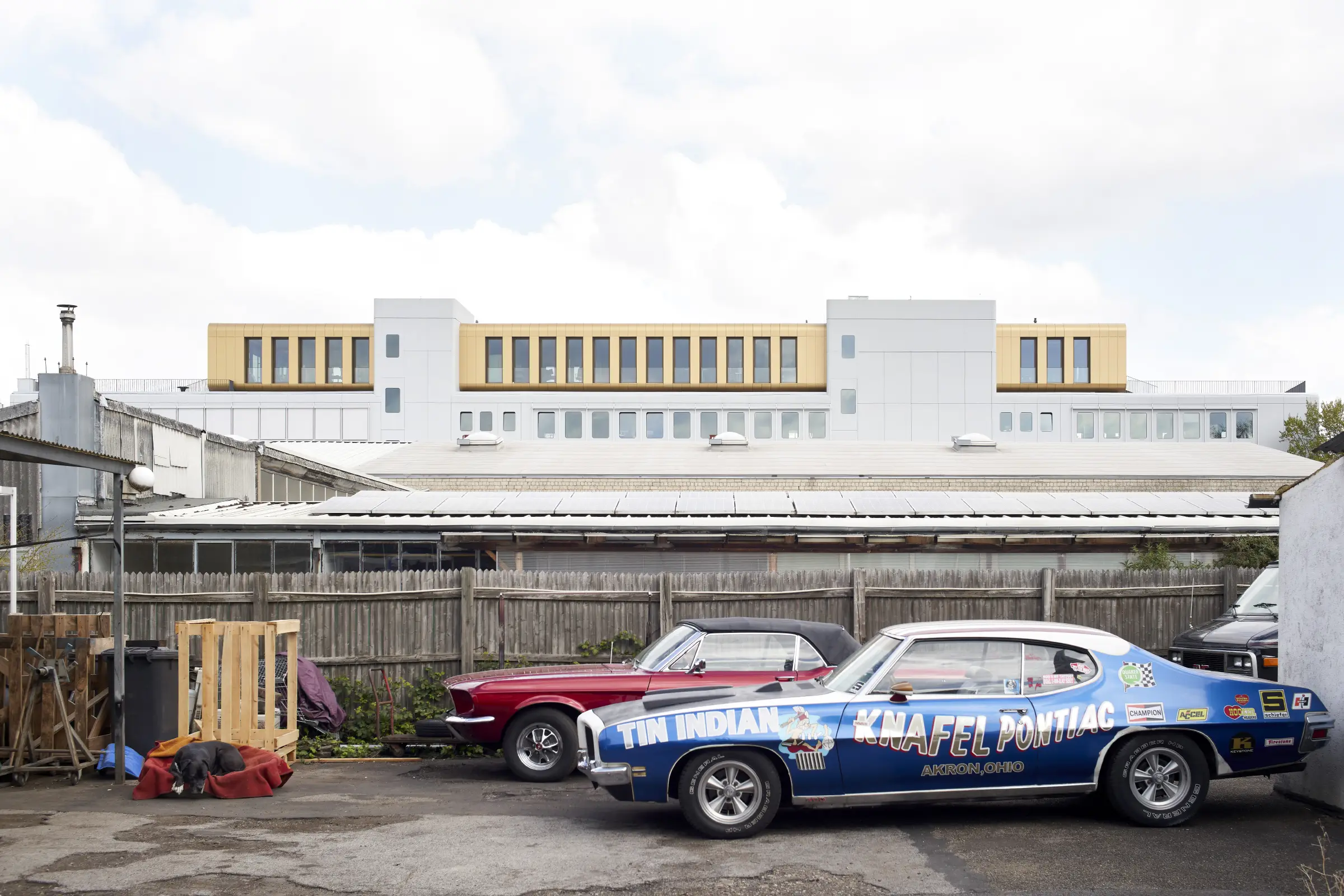
American cars and sleeping dog in front of Werft16 by Kresings with the gold upper storey visible in Düsseldorf

Werft16 – Kresings

...

Werft16 – Kresings

2021

Situated in a threshold between an old industrial area and aged office and residential buildings from the 80ies, the WERFT16 project by KRESINGS in Düsseldorf aims to revive the area and building by topping the old 80ies-style office body with a golden crown.

Close to the river Rhein and the port of Neuss, the ground floor of the building hosts a co-working space, communal areas for all offices and a kindergarden.

The interiors point to the industrial heritage of the area and the craftsmanship of its past, using finely crafted steel frame partitions, bare concrete and a colour palette that follows both, the nostalgia notion of the 80ies and the bold golden future.

2021
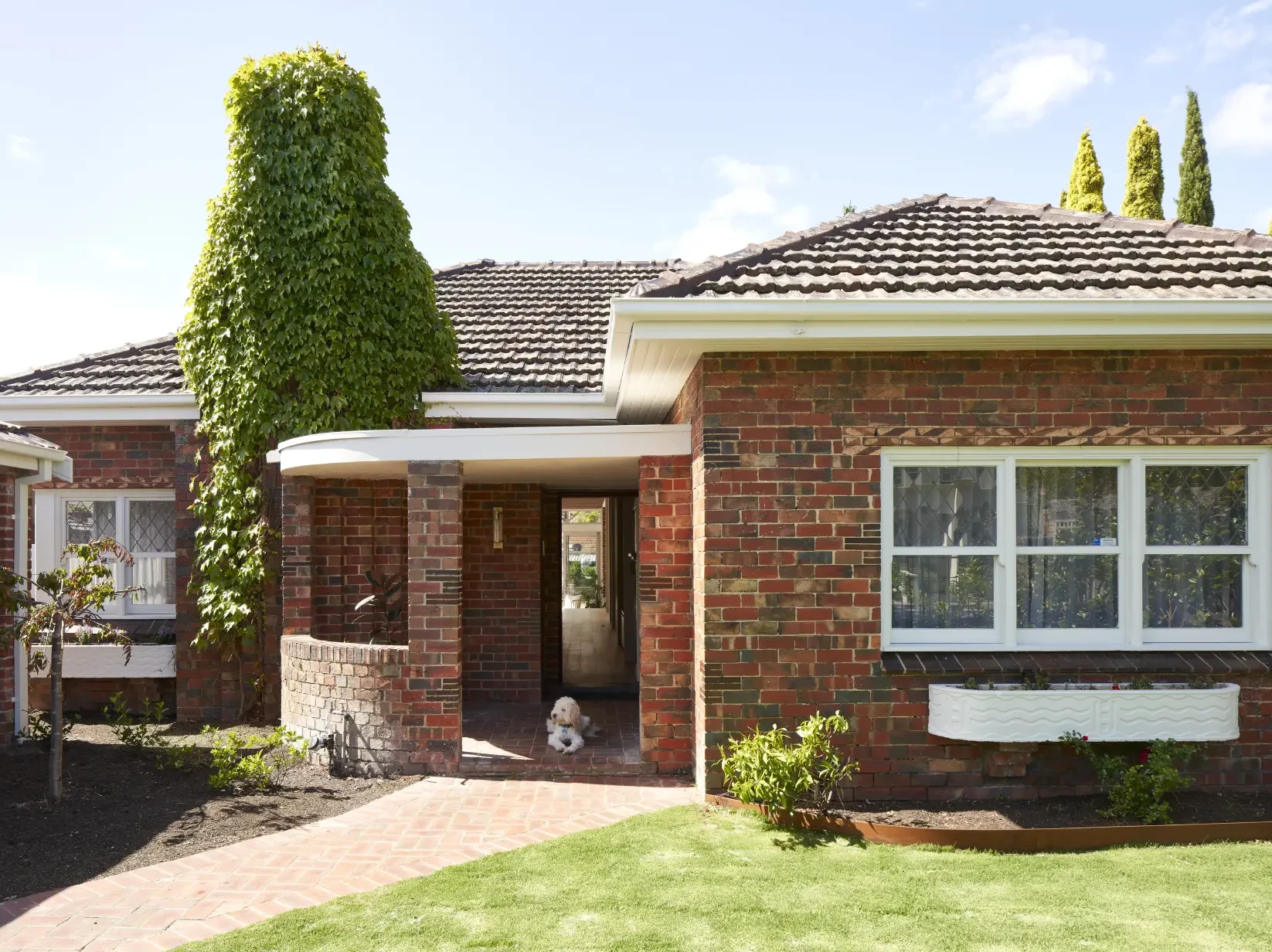
Street-facing elevation of Lindsay house renovation in Melbourne suburbs with dog lying in front of open front door

Lindsay – Megowan Architectural

...

Lindsay – Megowan Architectural

2023

Lindsay is the careful extension and renovation of a private house with a 1970ies Art Deco aesthetic in the southern suburbs of Melbourne, Australia.

Built on two slightly differing levels, Megowan Architectural aim was to enhance the flow and blur the boundaries of indoor and outdoor living areas on the gently sloping site – a classic and timeless Australian theme. 

The existing use of red brickwork that was carefully contrasted with light oak, red marble and exposed hardwood rafters to create an inviting atmosphere, shielding the private and exposing the shared spaces of the family.

2023
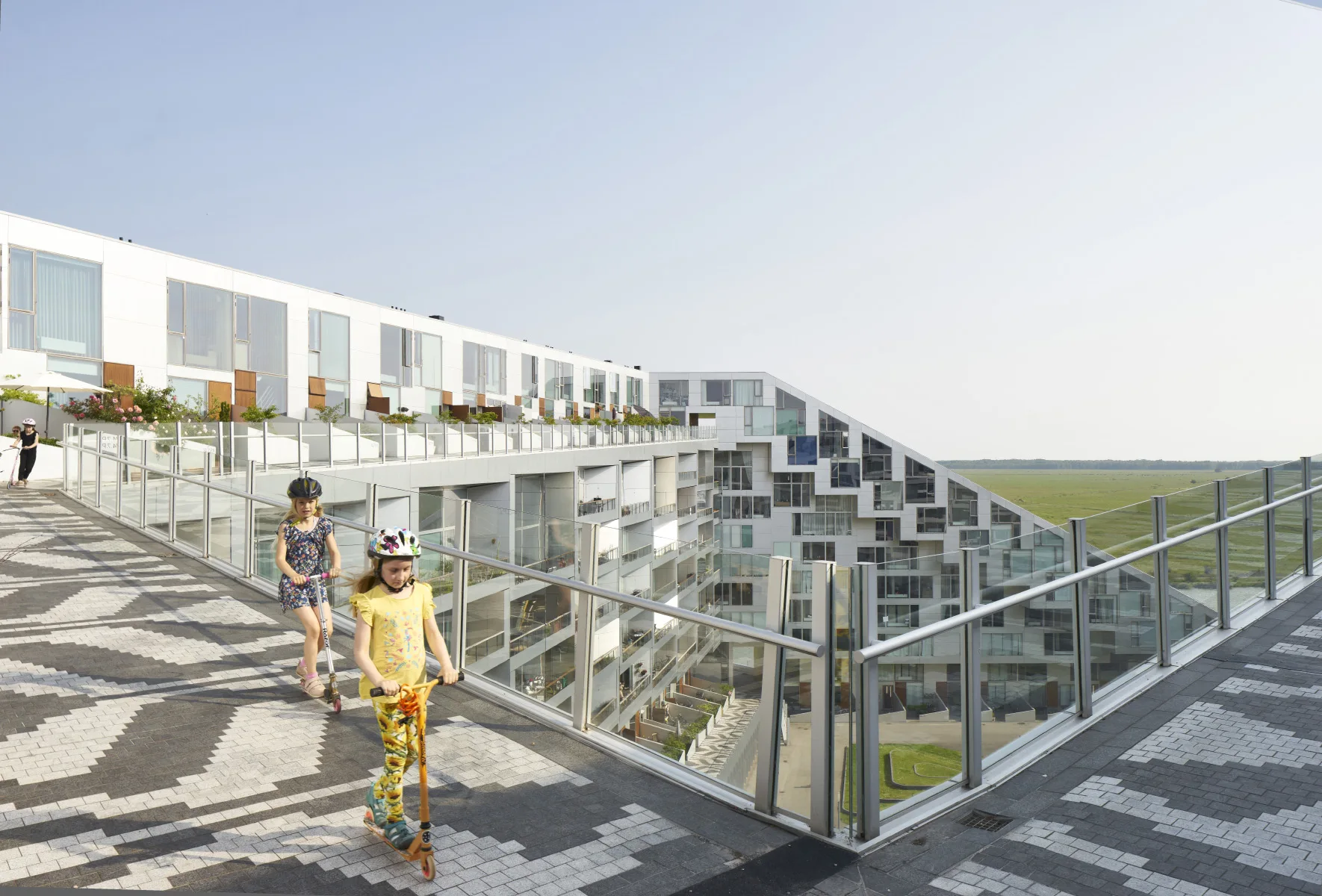
Kids riding scooters on the promenade path of the 8 House in Ørestad, Copenhagen by BIG / Bjarke Ingels Grpoup

8 House – BIG

...

8 House – BIG

2010

Arguably one of Denmark’s most famous buildings, the 8-House (8-Tallet), is and has almost reached a state of semi-mystic holiness in architecture-tourism – also thanks to Louise Lemoine and Ila Bêkas fantastic film “The Infinite Happiness”.

Situated in Ørestadt in Copenhagen’s south, the 8-House has the shape of an angled 8, it’s south-west corner dipping down to ground level and allowing the building  to open itself towards the canal and fields beyond. 

Designed by Bjarke Ingels Group/BIG, the building follows Ingels’ idea of “Architectural Alchemy” – mixing and stacking different typologies like town houses, row houses, retail areas and varying apartments. This mix creates an added value of a small micro-city, all connected by a wide promenade, reaching from ground floor to the 10th floor, providing a social space to ponder, stroll, skate and bike.

2010
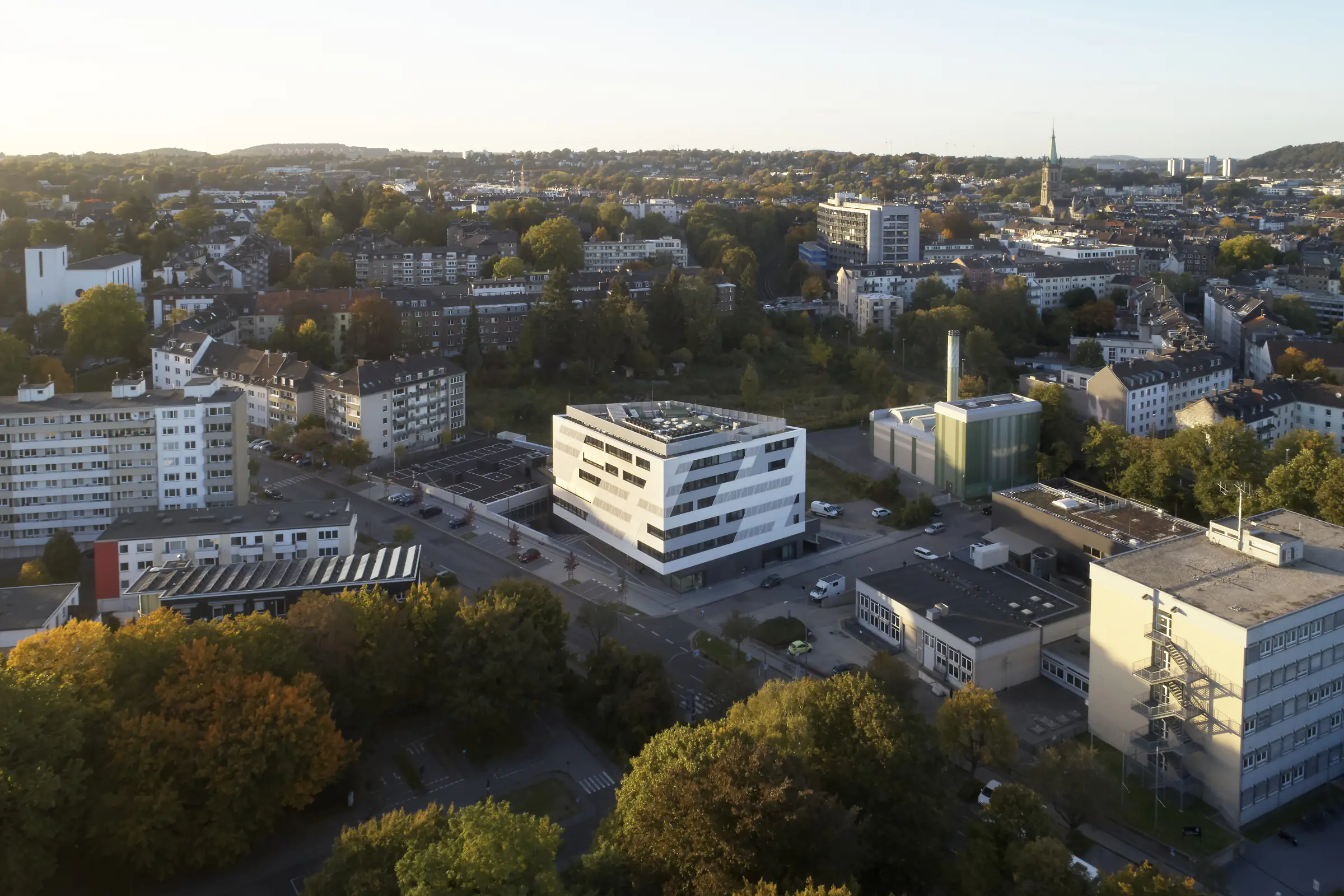
Aerial view of the KMAC Center for Advanced Mobility at FH Aachen

Center for Advanced Mobility, KMAC – studioMDA

...

Center for Advanced Mobility, KMAC – studioMDA

2022

The Center for Advanced Mobility of the Technical University of Aachen – Kompetenzzentrum Mobilität, FH Aachen – KMAC, is a new building for the University, focusing on research and development of futuristic mobility solutions.

The facility houses state-of-the-art high-performance engine testing labs, offices, collaborative workspaces, a lecture theatre and a public cafeteria. 

New York based studioMDA won the international competition with their proposal wich conceived its final form through a series of wind studies to optimise air flow and natural ventilation.

Occupied by the three departments of electrical engineering and information technology, aerospace and mechanical engineering and mechatronics, the form of the structure is made up of two elements. A section housing laboratories, work spaces and theatre hall, integrated and sunken into the topography of the site. Visually dominant and floating above is the “think box”, housing offices and collaborative learning spaces.

2022
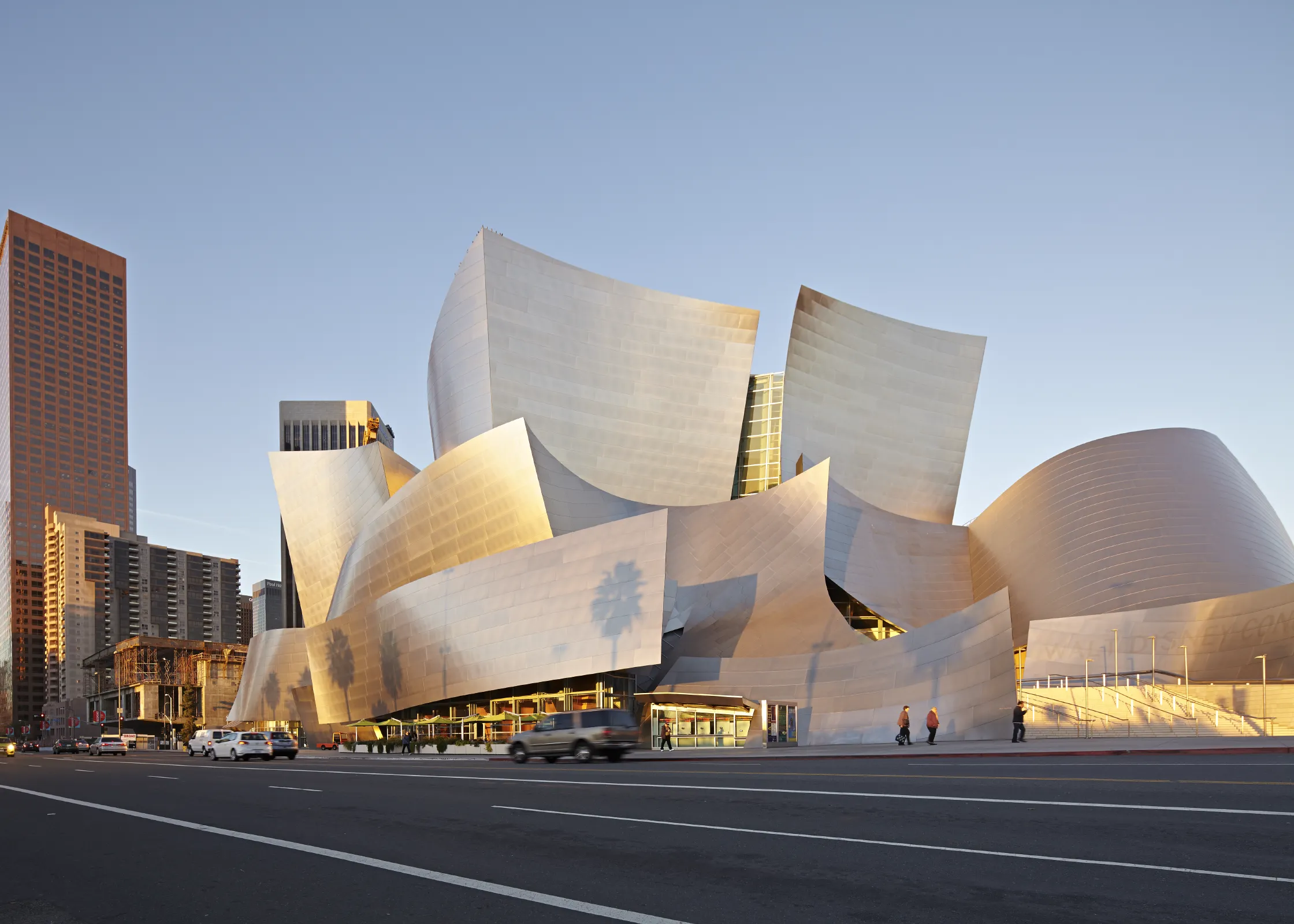
Walt Disney Concert Hall glowing in golden hour light in Los Angeles

Walt Disney Concert Hall – Frank Gehry

...

Walt Disney Concert Hall – Frank Gehry

2003

Home to the Los Angeles Philharmonic Orchestra and the Los Angeles Master Chorale, the Walt Disney Concert Hall sits on top of a small hill, overlooking downtown Los Angeles.

Designed by Frank Gehry 1991, the building was funded through Lilian Disney, the Disney Company and private donors.

Finished and opened to the Public in 2003, the acoustics of the concert hall, designed by Minoru Nagata, at the time where praised as some of the best in the world.

The building itself is quite the fantastic Ghery-experience. The giant sloping curves of its intersecting volumes where originally planned to be clad in stone, intended to gently glow with evening and morning light. The metal, which the client decided on instead, has a sharper, harder quality and almost absorbs the light at night, while the reflection at noon are blindingly bright.

The building feels like something out of a child’s dream, an ever changing alice-in-wonderland imagined architecture, quite in contrast to its immediate present context of towering skyscapers and buildings from the late 1960ies.

2003
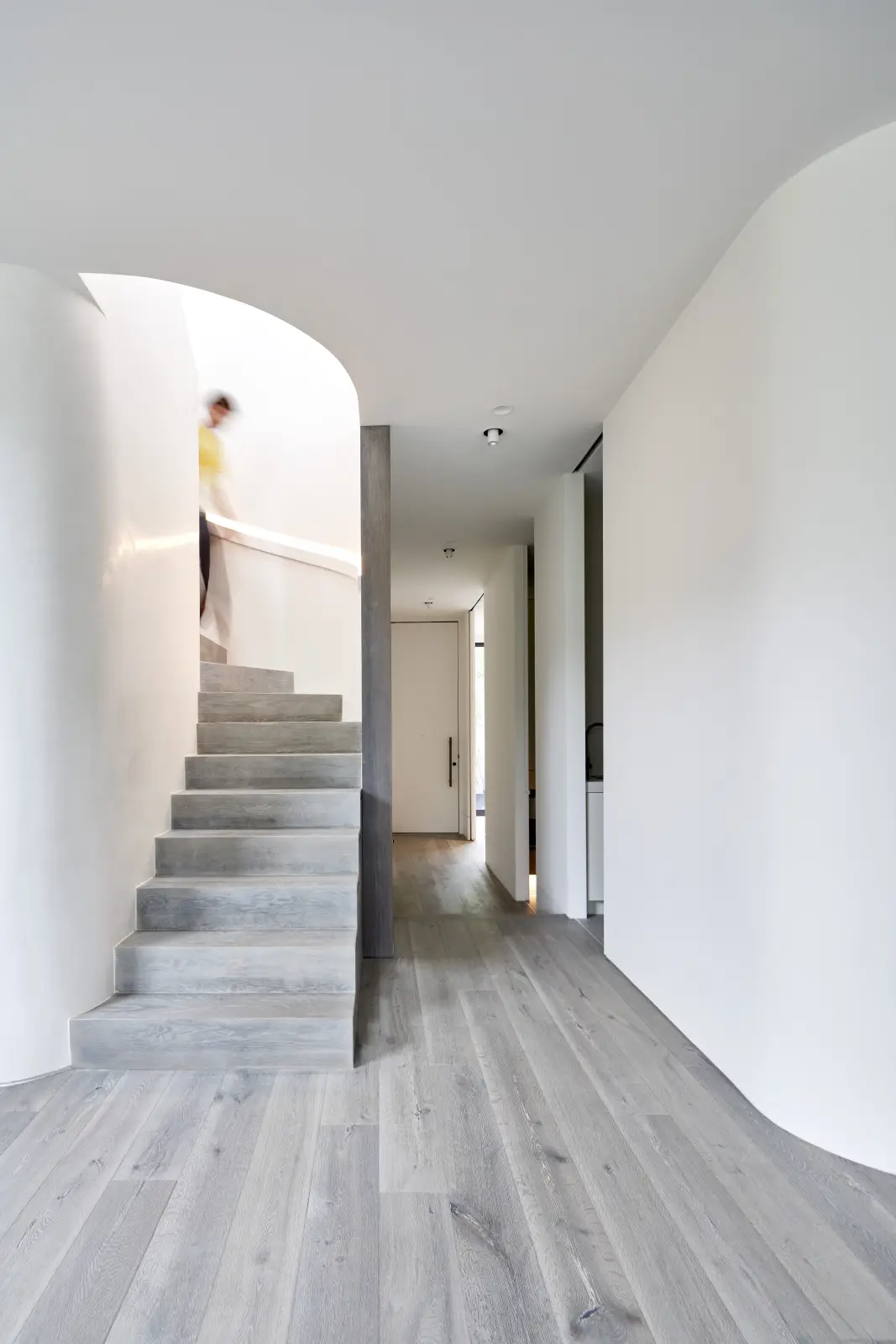
Person descending the dark ash staircase in light-filled hallway at Alexandra Street South Yarra

Alexandra Street – Megowan Architectural

...

Alexandra Street – Megowan Architectural

2023

The Alexandra Street residence is a private house with a compact urban footprint in the inner suburb South Yarra of Melbourne, Australia.

Careful spatial planning by Megowan Architectural maximises available space for this family home. Masonry stone and large operable metal louvers create much needed privacy, while allowing a large amount of natural light to filter into the restrained but luxury interior.

2023
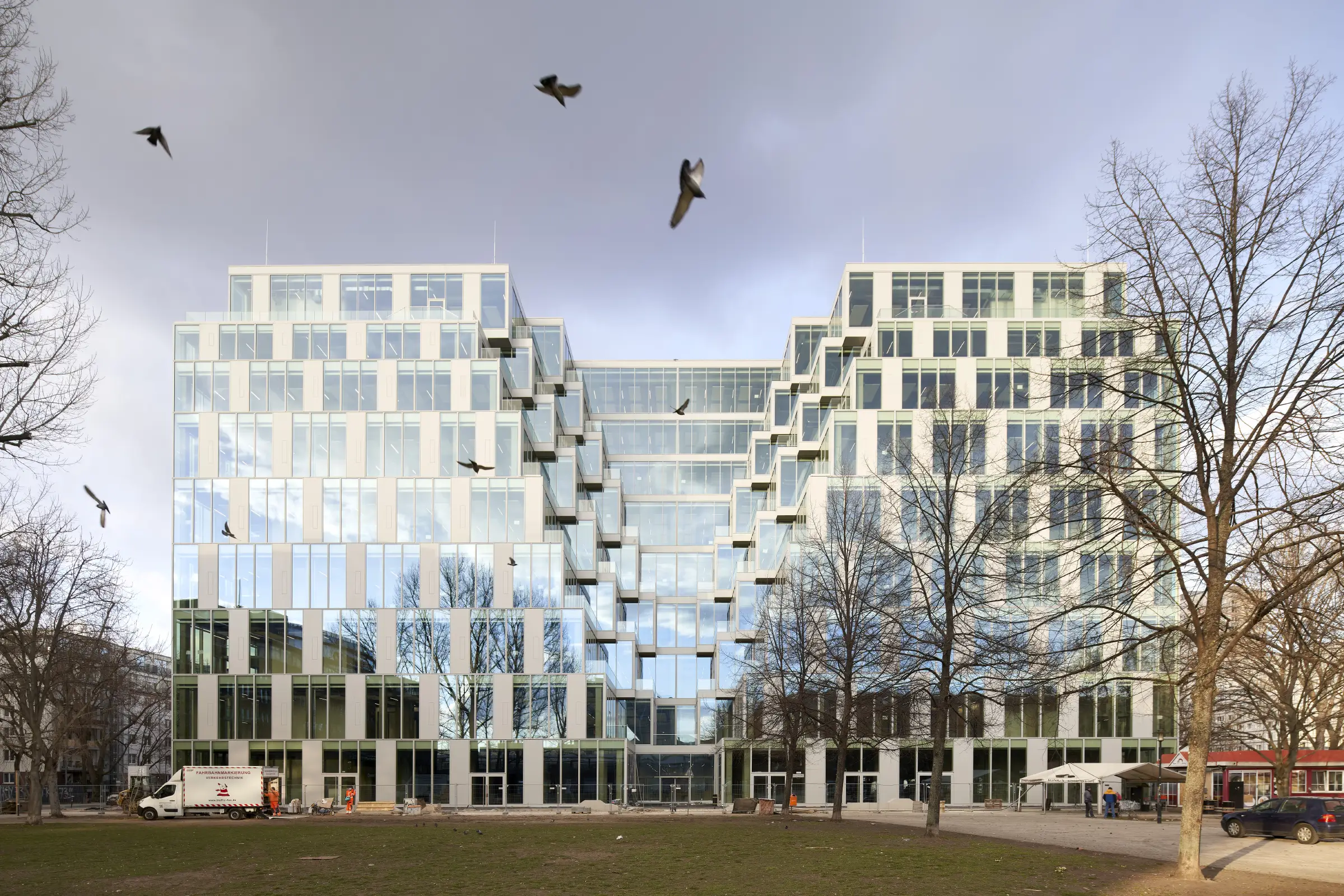
Birda in the dramatic sky at transformed Centrum Warenhaus in Berlin by Jasper Architects

UP! Berlin – Jasper Architects

...

UP! Berlin – Jasper Architects

2021

Once the largest and most modern department store of the former GDR, the original building Centrum Warenhaus opened to the public in 1979 in close proximity of Berlin´s Ostbahnhof. After the reunification of Germany the monolithic structure served its intended purpose until its closure due to financial difficulties.

Sold to the property developer SIGNA Real Estate, JASPER ARCHITECTS and Gewers Pudewill won the competition to redesign the building and reuse as much of the old structure as possible.

The design concept saw the 80 x 80m block cut open on all four sides, following a funnel shape and allowing much needed natural light into the inside. The original structure of its five floors left bare and exposed, the architects inserted new structural elements, accentuated by bright colour and chose floor-to-ceiling glass panels for the façade cladding, transforming the interior into modern, light-filled open plan office spaces attractive to Berlin´s ever-hungry start-up scene.

2021

Quay Quarter Tower – 3XN + BVN

...

Quay Quarter Tower – 3XN + BVN

2022

At the edge of Sydney’s Circular Quay precinct, where the city meets the harbour and the Opera House’s shells curve into the sky, the Quay Quarter Tower rises with the quiet confidence of something that has always been there — and, in a sense, it has.

Completed in 2022, the tower was designed by Copenhagen-based 3XN architects and developed in close partnership with BVN. The 54-storey, 216-metre tower is not a new building so much as a reinvention of one. Rather than demolishing the 1976 AMP Centre that previously occupied the site, 3XN retained 68% of the existing structure — its concrete core, columns, beams and floor slabs — and transformed it into one of the most awarded tall buildings in the world. The result is the world’s first upcycled skyscraper: an act of architectural patience that saved nearly 12,000 tonnes of CO₂ compared to a conventional rebuild.

Five stacked and shifting volumes rotate slightly as they rise, opening views to the harbour while the cantilevered sunshade hoods keep the glass free of blinds — and the outlook permanently unobstructed.

At street level, the building genuinely gives something back. The podium opens itself to the city through large public steps, flowing escalators and terraces — a porous threshold between the tower’s commercial life and the movement of Sydney below. On the podium rooftop, Olafur Eliasson’s Roof for stray thoughts (2022) crowns the transition between old and new: a signal-yellow canopy of interwoven steel elements casting shifting shadow patterns below, entirely alive.

Caught between Opera House and Harbour Bridge, the tower holds its place in the skyline without raising its voice — a sleeping giant hiding in plain sight amongst the chaotically orchestrated battle of high-rises. Up close, that quietness turns inward: the atrium spaces at the base of each volume hum with the energy of an anthive among the roots of an old tree. The innovation here was never going to announce itself. It’s structural, embedded, patient — much like the city it calls home. – Another strong example of Danish-design ingenuity stands tall in Sydney.

2022
SQUARE Learning Center surrounded by landscaping on the University of St. Gallen campus

SQUARE Learning Center, HSG – Sou Fujimoto

...

SQUARE Learning Center, HSG – Sou Fujimoto

2022

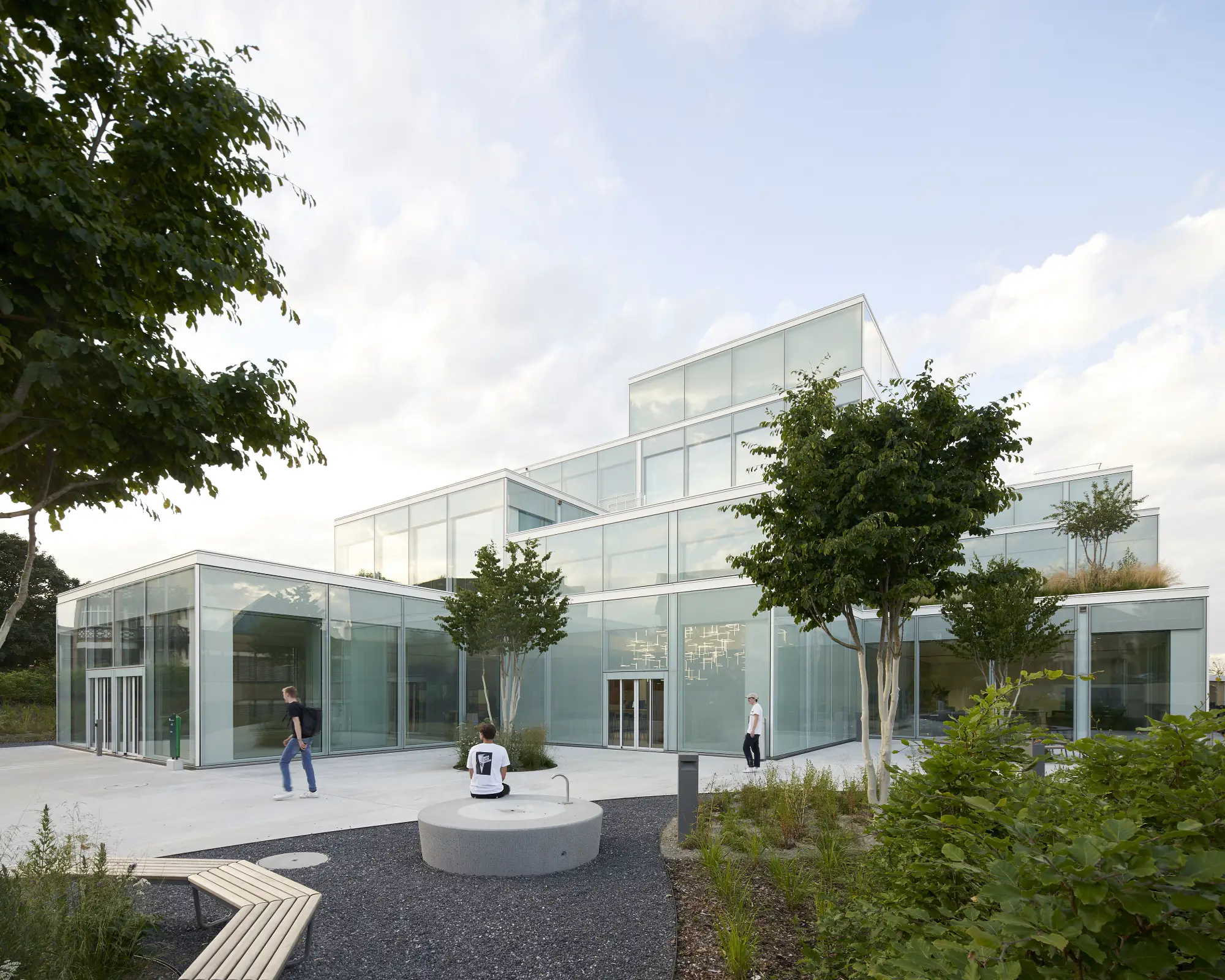
Situated on top of a hill , where the campus of the University of St. Gallen greets its surrounding residential neighbourhood, the SQUARE Leaning Center takes its name from the public square in front of the building.

Designed by Sou Fujimoto Architects, the building unfolds in a terraced vertical cascade of 92 squares, each with the same dimensions of 10 x 10 meters. The internal layout is organised around an enormous central atrium wich spans all four floors and is designed with maximum flexibility in mind – layout and furniture of the spaces can be changed, depending on the need of the students and class sizes.

The external face of the building is dominated by its reflective glass facade – some times closed to reduce solar impact, sometimes open to let the internal light spill out. The terraced cascading form of the stacked squares allows for ample outside spaces – green terraces wich are also used freely by students and staff alike.

Visiting the building a few month after its inauguration, it fells like a busy ant hive, full of the energy of eager students, happy to share their knowledge.

2022
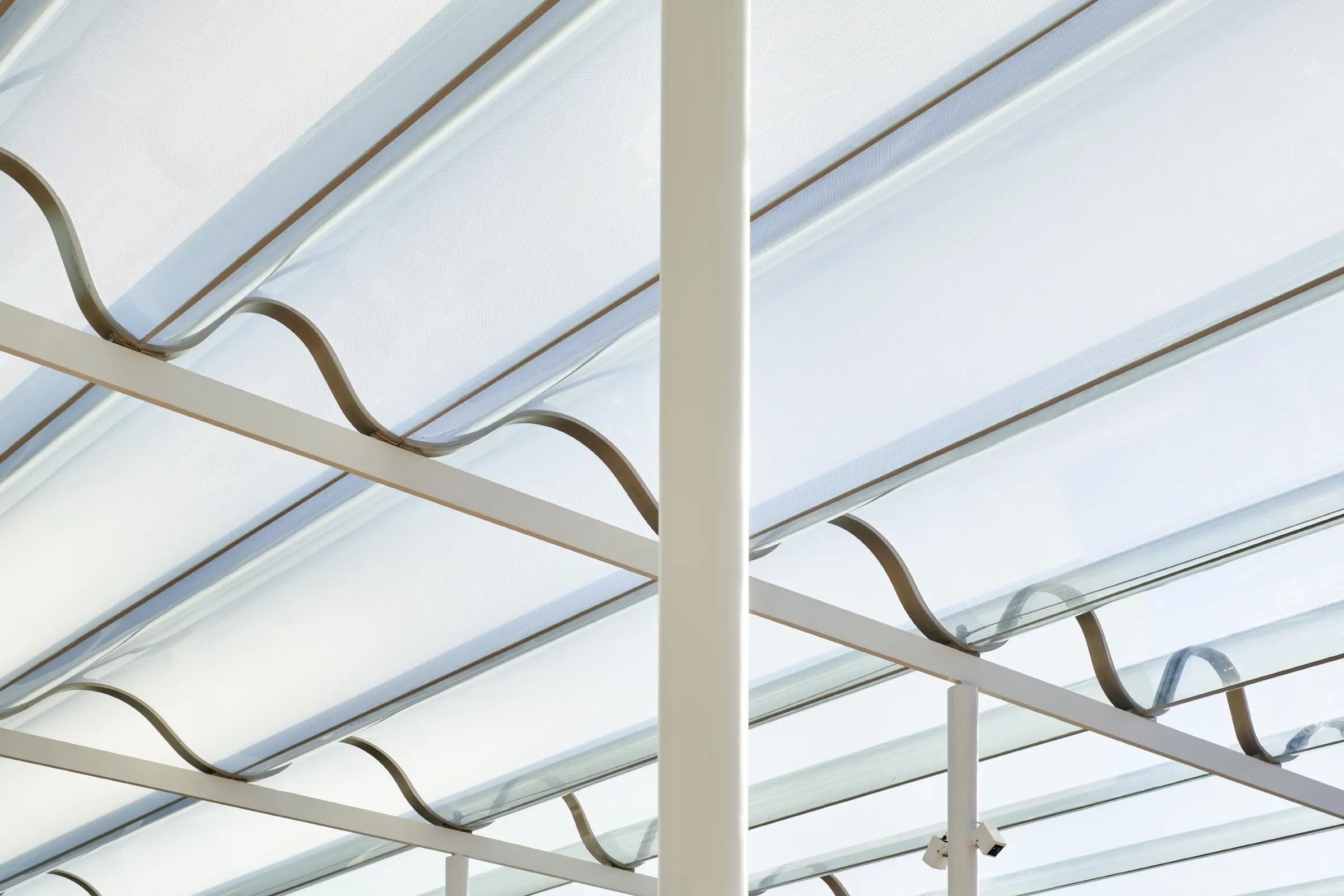
Undulating glass canopy with bronze wave supports at Sydney Modern by SANAA

Sydney Modern – SANAA

...

Sydney Modern – SANAA

2022

Inaugurated in December 2022, the Sydney Modern by SANAA is a remarkable architectural expansion of the Art Gallery of New South Wales in central Sydney.

Situated between existing heritage listed buildings and in close vicinity to the UNESCO listed Sydney Opera House, the design responds to the challenging topographical and cultural constraints of the site by stacking a series of interconnected boxes into the the ground, carefully changing and expanding the natural topography.

SANAA’s material response is minimalist and transparent. Clad in crystalline glass façades held by seemly light-weight steel structures, the bodies of the boxes create a changing dialog of internal/external and reflect the ever-changing light of Sydney Harbor, while creating fantastic views of the city and its natural topography. This subtle but significant design choice ensures that the Sydney Modern Project does not overshadow the Opera House but instead complements its unique architectural language.

2022
Detail of red and orange metal cladding on PHIVE roof structure Parramatta

PHIVE Community Center – Manuelle Gautrand

...

PHIVE Community Center – Manuelle Gautrand

2023

Situated adjacent to the western fringes of Sydney, the PHIVE Community Center is a new structure in the center of the city of Parramatta.

Designed by Manuelle Gautrand Architects in collaboration with Designinc and Lacoste+Stevenson Architects, the colourful and bold structure hosts the Council Chambers, a public library, as well as exhibition and community spaces.

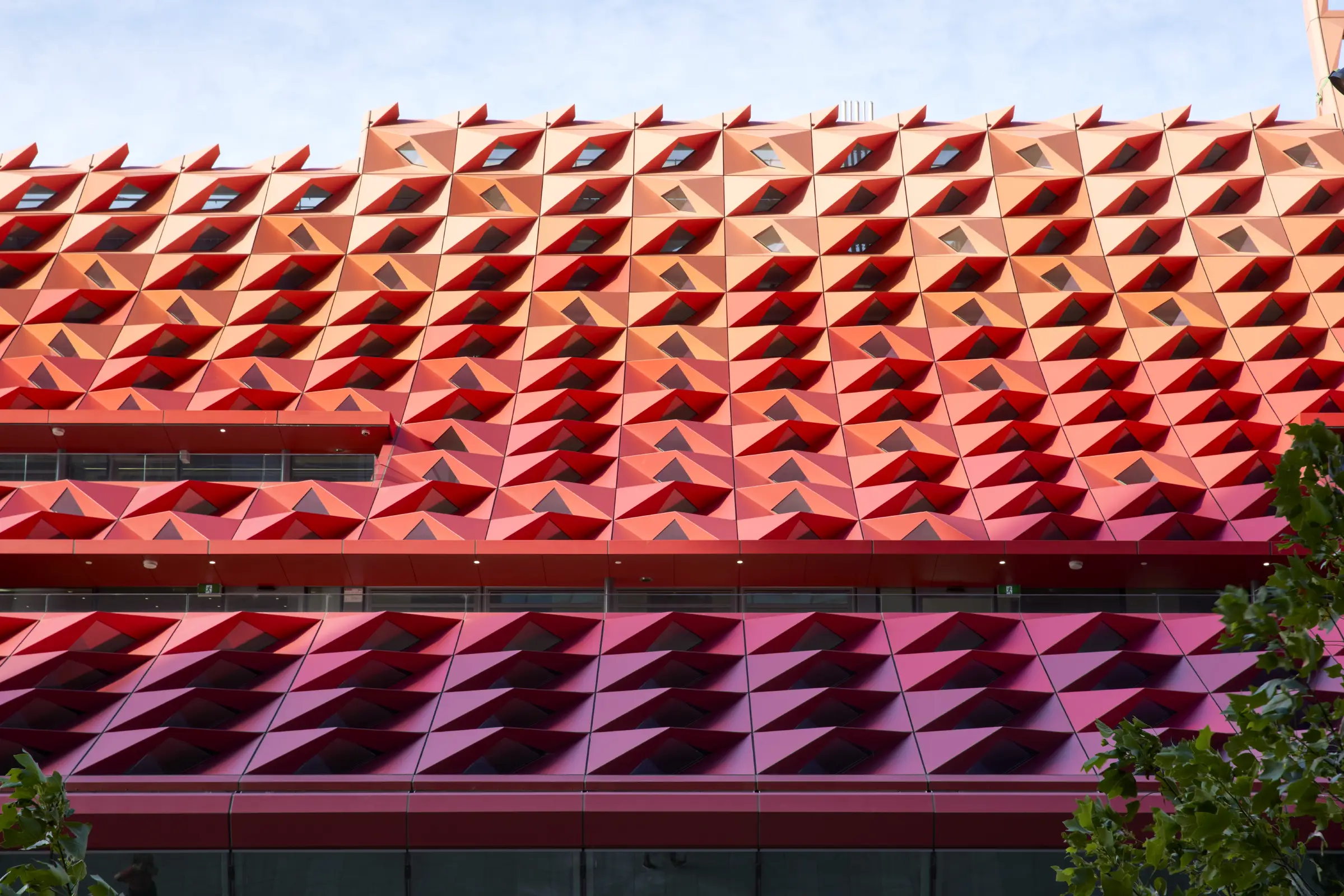
Visually dominated by a bright red to orange curved roof structure, the building is conceived to not overshadow the densely populated Parramatta Square. Situated on the first and second floor, the library is overlooking the square through a floor to ceiling spanning glass facade. 

The Council Chambers are situated in the more restrained and quiet upper levels, where triangular openings in the hooded roof structure create ever changing light effects and long balconies allow for some fresh air.

2023
Haus-der-Kulturen look

HKW Pavilion – Raumlabor

...

HKW Pavilion – Raumlabor

2023

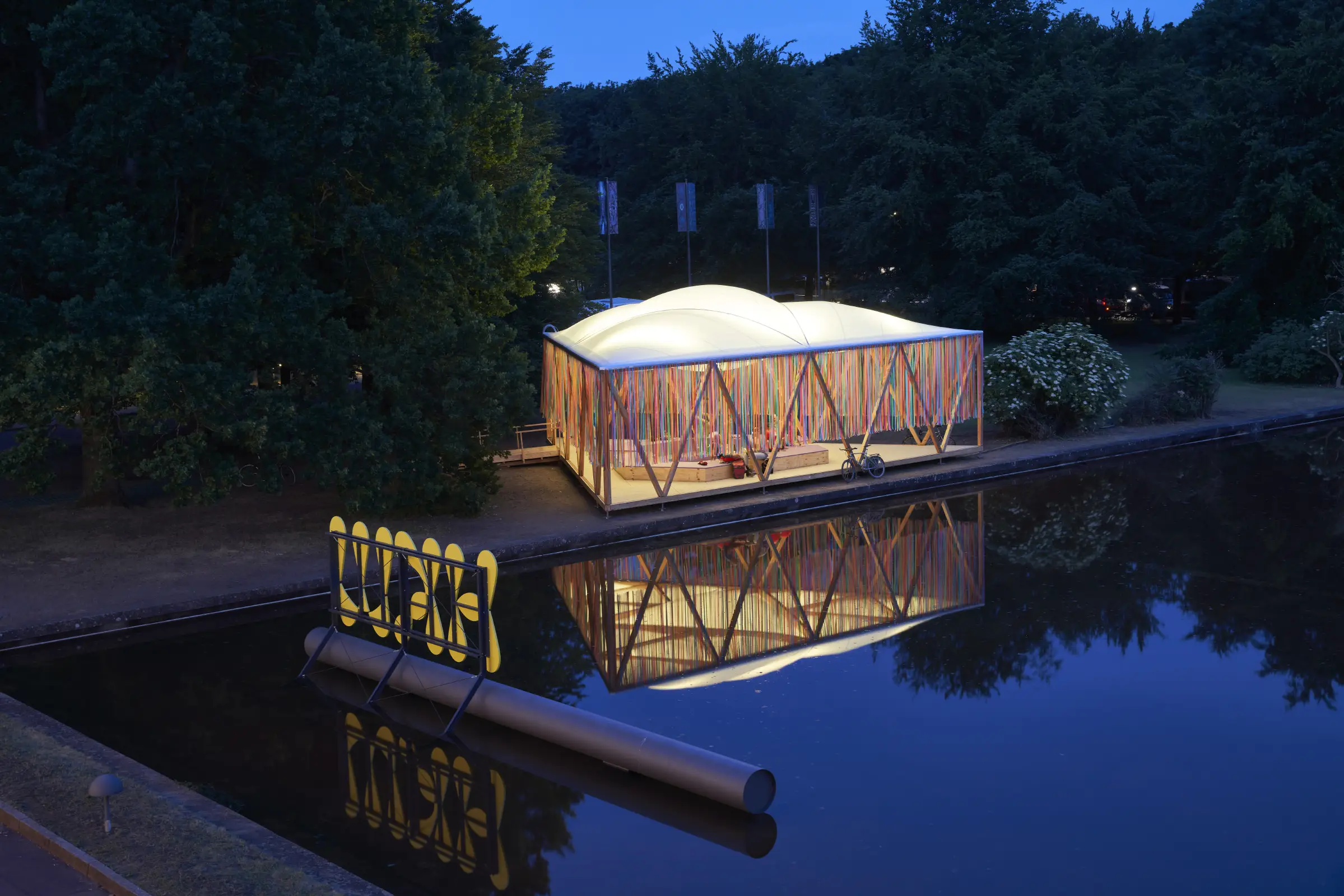
For the reopening of the HKW – Haus der Kulturen der Welt in central Berlin, the institution reinvented itself as a “multidisciplinary institution for art, performance, sound and music, architecture, literature and a place for scientific and cultural exchange.

The colourful festive event of the reopening in 2023 also saw the inaugural installation of a new series of annually changing temporary pavilions as artistic interventions in public space. 

This architectural and programmatic expansion was fantastically designed by Raumlabor Berlin and quite literally, and creating an experimental meeting space which reflects the newly found core values of the institution – colourful, open, positive and fun.

2023
Cyclist passing Pressehaus am Alexanderplatz by GMP Architects in Berlin

Pressehaus am Alexanderplatz – GMP Architects

...

Pressehaus am Alexanderplatz – GMP Architects

2023

Originally constructed 1970 – 1973 as the building of the Berliner Verlag publishing house, the Pressehaus am Alexanderplatz was designed by architects Karl-Ernst Swora, Rainer Hanslik, Günter Derdau, Waldemar Seifert, and Gerhard Voss. Conceived as a competitor to the Axel-Springer-Hochhaus of West Berlin in 1965, the original ensemble consists of a 92-meter tall high-rise, accompanied by the low rise strucutre od the Pressecafe, overlooking Berlin’s Alexanderplatz.

While carefully restorating the historic ensemble, its facade and Willi Neubert’s (1920–2011) distinctive outdoor frieze at the Press Cafe, GMP Architects also a new podium building, carefully curving around the back of  the high-rise, building a more subtle approach to the adjacent Scheunenviertel and its Berlin-sized scale.

2023
This site is registered on wpml.org as a development site. Switch to a production site key to remove this banner.